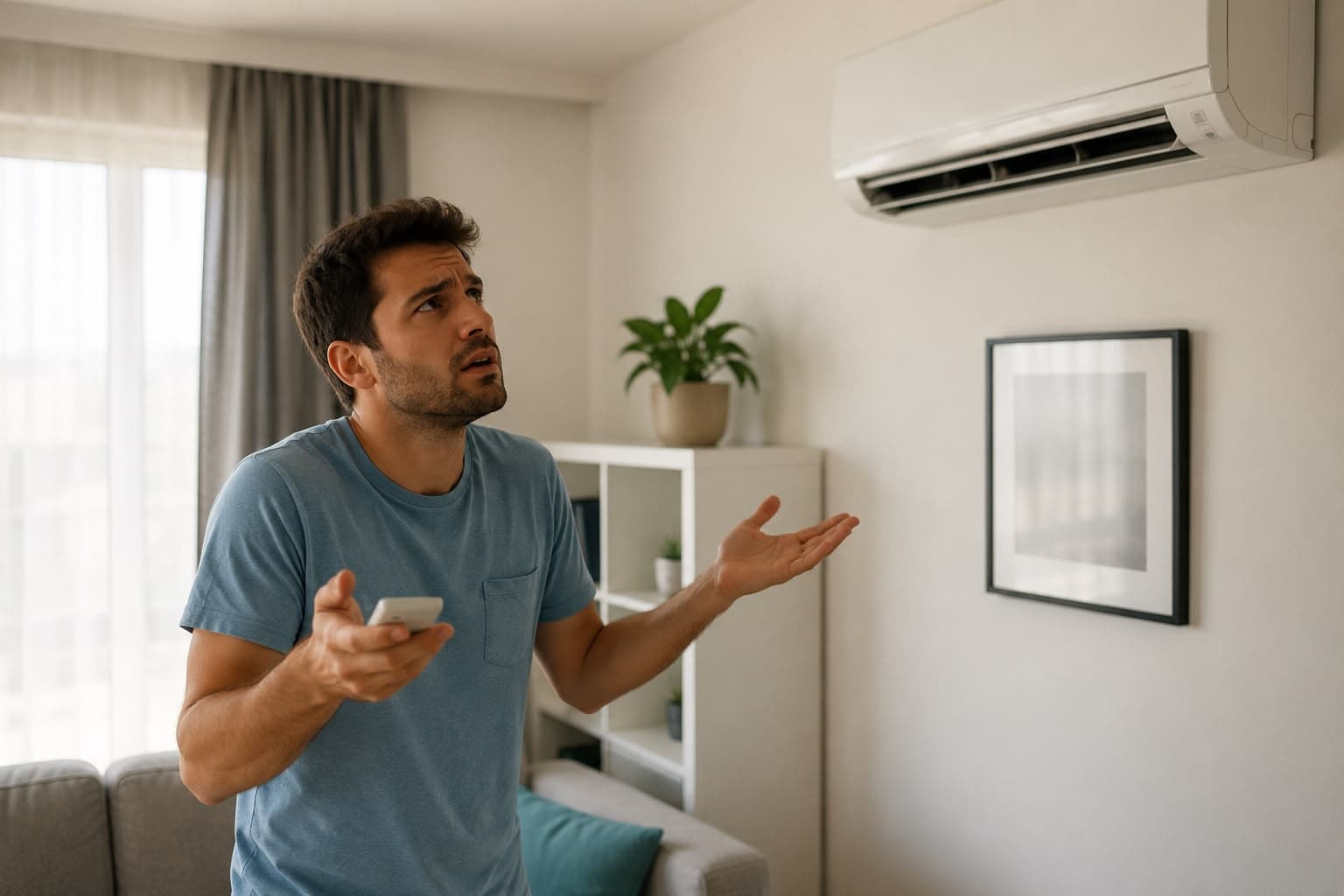
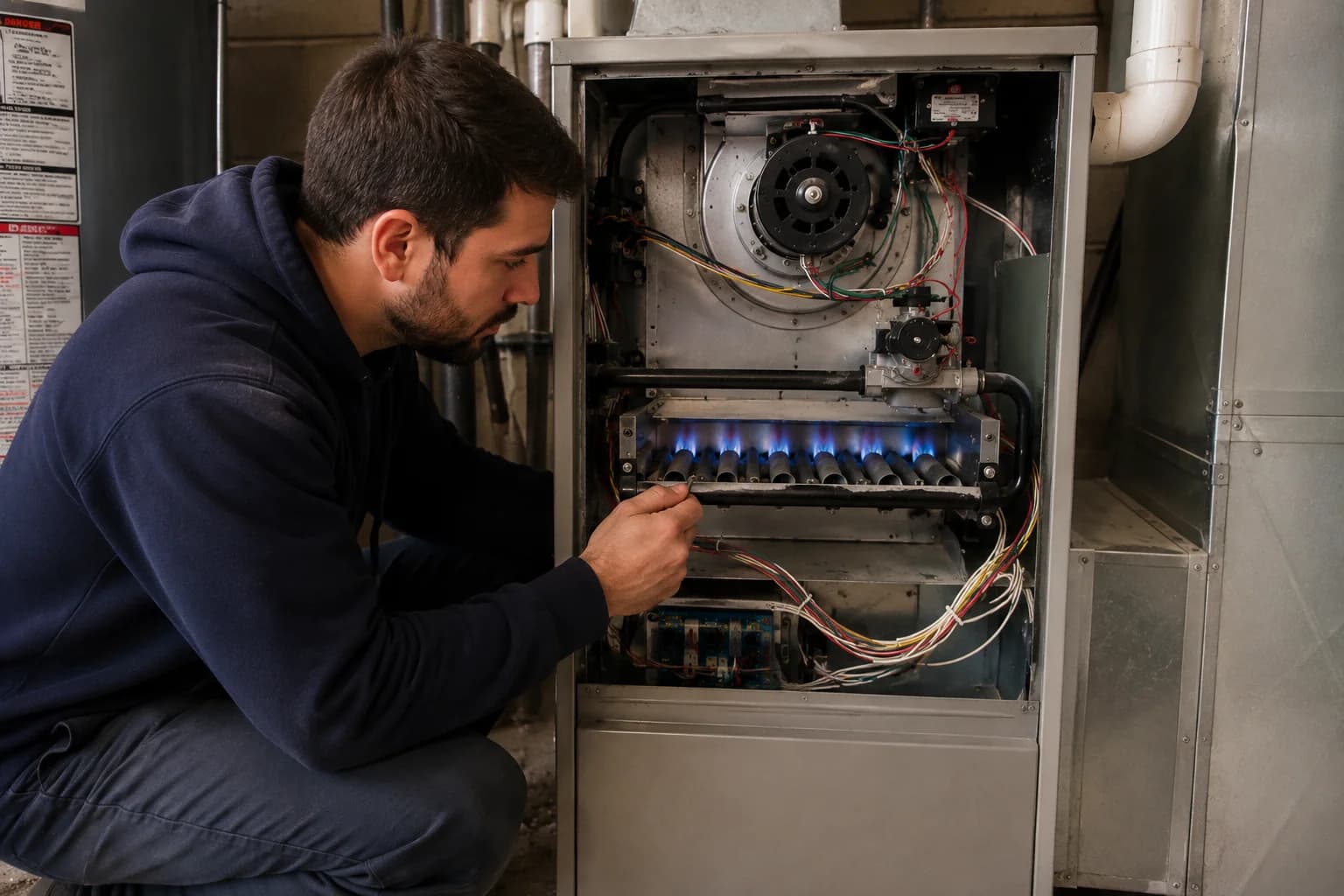
You turn the thermostat up because the house feels cold. The furnace starts, you hear the system running, and air comes through the vents — but instead of warm air, it feels cool.
That is usually the moment people start wondering, “Why is my furnace blowing cold air?”
The good news is that not every case means your furnace needs to be replaced. Sometimes the cause is something simple, such as a thermostat setting, a dirty air filter, or the furnace going through its normal startup cycle. Other times, cold air can point to a problem with ignition, airflow, a safety switch, or another part of the heating system.
Here are seven common reasons a furnace may blow cold air, what you can safely check yourself, and when it makes sense to have an HVAC professional take a closer look.
First: Is the Furnace Actually Blowing Cold Air?
Before assuming something is wrong, give the furnace a little time.
When a furnace first starts, it may take a short period before warm air reaches the vents. If the air becomes warm after the startup cycle, there may not be a problem at all.
But if the furnace continues running and the air coming from the vents stays cool, or the system repeatedly starts and stops without properly heating the home, there is likely something that needs attention.
A useful first step is to check the thermostat.
1. The Thermostat May Be Set Incorrectly
This is one of the easiest things to overlook.
Make sure the thermostat is set to HEAT, not COOL, OFF, or FAN. Then check the temperature setting. If the set temperature is only slightly higher than the current room temperature, the furnace may not run long enough for you to notice much warm air.
Also check the fan setting.
If the thermostat fan is set to ON, the blower can continue moving air even when the furnace is not actively heating. That air can feel cool, especially during colder weather.
Try setting the fan to AUTO and see whether the furnace begins operating normally.
If the thermostat appears to be behaving strangely, repeatedly resets, or does not seem to communicate properly with the heating system, the issue may require further diagnosis.
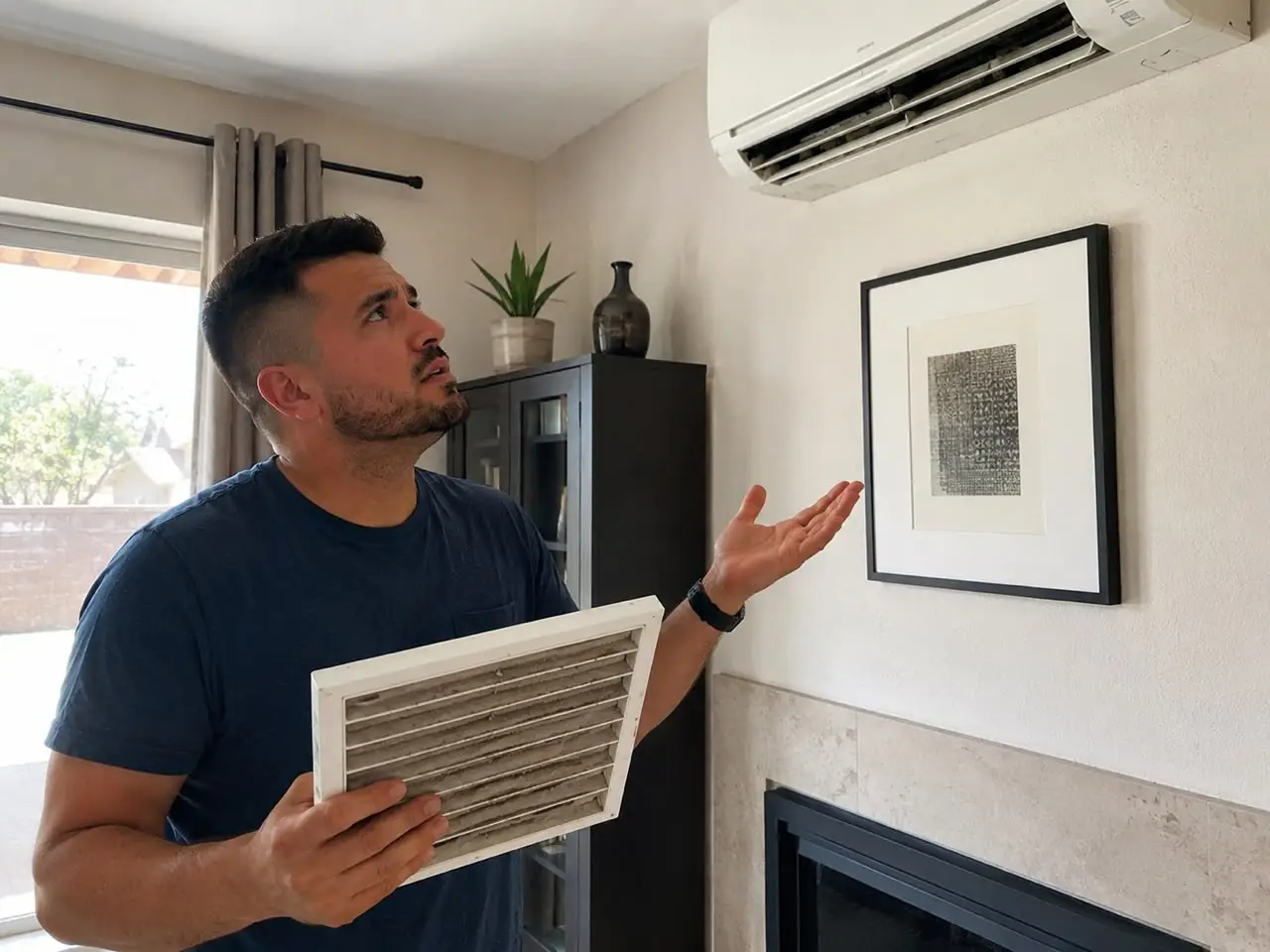
2. A Dirty Air Filter Can Restrict Airflow
Your furnace needs proper airflow to operate correctly.
When an air filter becomes heavily loaded with dust and debris, less air can move through the system. Restricted airflow can cause the furnace to overheat, which may trigger a safety feature that shuts the burners off while the blower continues running.
The result can be confusing: you hear the furnace running, but the air coming from the vents is no longer warm.
Check the filter if you can access it safely.
If it looks heavily dirty or clogged, replacing it with the correct size and type may improve airflow. Always follow the manufacturer's recommendations for the filter.
A dirty filter can also contribute to other heating and indoor comfort problems, so it is worth checking before assuming that the furnace itself has failed.
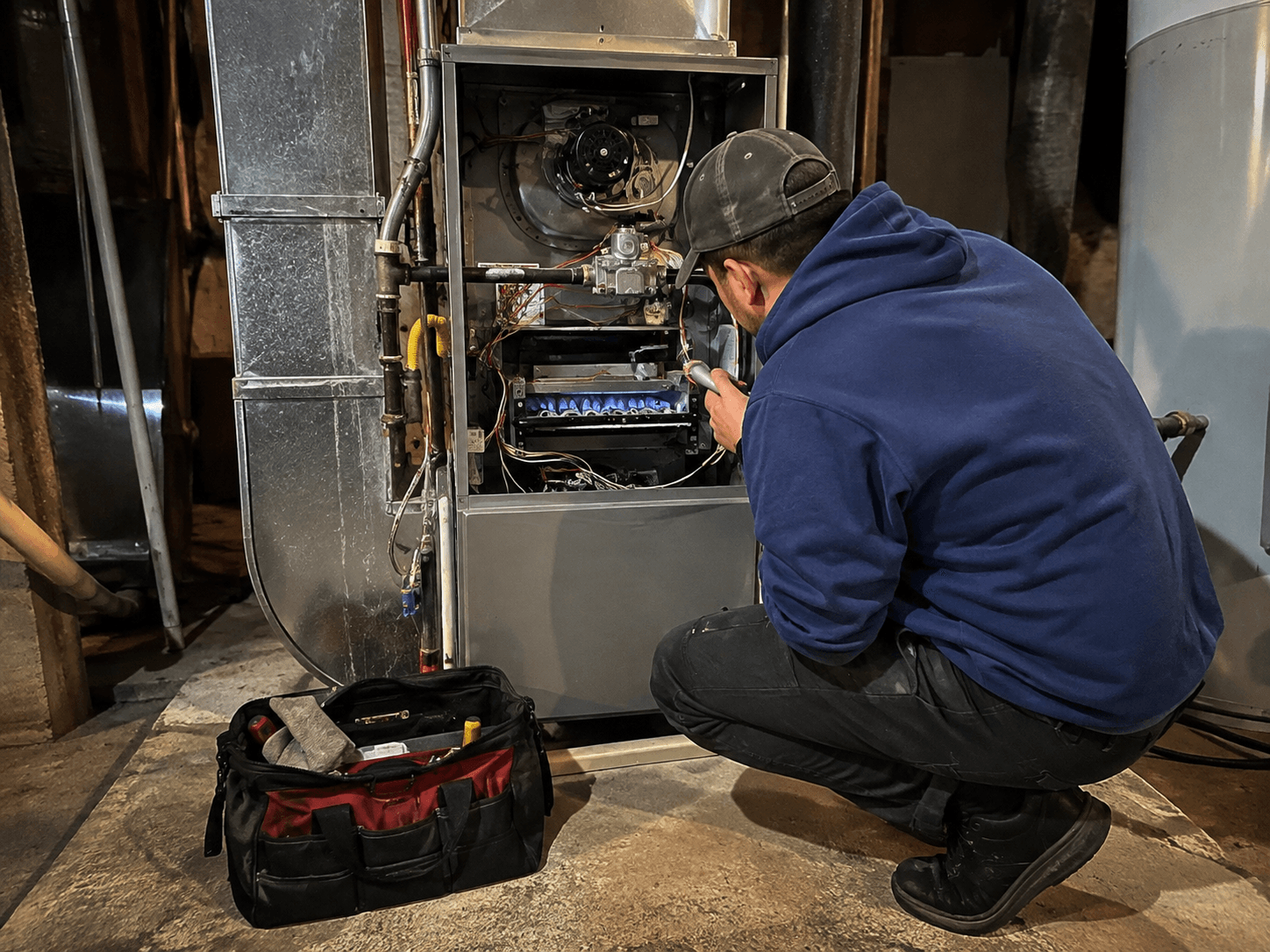
3. The Furnace May Have an Ignition or Burner Problem
Modern furnaces need to ignite fuel properly before they can produce heat.
If the ignition system does not work correctly, the blower may still operate even though the furnace is not producing the expected heat.
Depending on the furnace design, the problem could involve an ignition component, flame sensor, burner, gas supply, or another part of the heating system.
This is where furnace troubleshooting becomes more complicated.
Do not attempt to disassemble the furnace or bypass a safety control just to get it running. Gas-fired heating equipment involves combustion and electrical components, so problems that go beyond basic checks should be handled by a qualified HVAC technician.
If your furnace repeatedly tries to start but fails to produce heat, professional diagnosis is the safer approach.
4. The Furnace Could Be Short Cycling
Short cycling happens when a furnace starts, runs for a relatively short time, shuts down, and then starts again before properly heating the home.
There are several possible causes.
A restricted air filter can contribute to overheating. An improperly sized system, thermostat issue, airflow problem, or malfunctioning component can also cause unusual cycling.
You may notice that the furnace sounds like it is working, but the house never reaches the temperature shown on the thermostat.
If this keeps happening, do not simply keep resetting the system. Repeated cycling can indicate an underlying problem that needs to be identified.
5. The Flame Sensor May Be Dirty
A furnace flame sensor is a safety component that helps confirm that the burner flame has actually been established.
If the sensor becomes dirty or develops a problem, the furnace may ignite briefly and then shut the burners down.
The blower may continue running, making it appear as though the furnace is operating normally when it is actually failing to maintain heat.
This is a common example of why a furnace that “sounds like it is running” is not necessarily a furnace that is producing heat correctly.
Cleaning or testing furnace components should be approached carefully. If you are not trained to work on heating equipment, it is better to have a professional inspect the system rather than removing or adjusting internal components yourself.
6. The Furnace May Have an Airflow or Duct Problem
Sometimes the furnace is producing heat, but that heat is not reaching the rooms properly.
For example, a blocked return vent, restricted ductwork, closed supply registers, or a problem with the blower can affect how heated air moves through the house.
There is an easy distinction to make:
If the air coming directly from the furnace is warm but certain rooms remain cold, airflow or duct distribution may be part of the problem.
On the other hand, if the air coming from multiple vents is consistently cool while the furnace is supposed to be heating, the issue may be closer to the furnace itself.
Do not close a large number of supply vents in an attempt to force more heat into another room. Your heating system is designed around a particular airflow pattern, and major airflow changes can create additional problems.
7. A Safety Control May Be Shutting the Heat Off
Furnaces contain safety controls designed to prevent unsafe operation.
If the system detects a condition such as excessive temperature, ignition failure, or another abnormal operating condition, a safety control may stop the heating process.
The blower can sometimes continue operating afterward, which leaves homeowners with the impression that the furnace is running but only blowing cold air.
This is one reason you should not repeatedly reset a furnace without understanding why it is shutting down.
If the same problem keeps returning after a basic thermostat or filter check, the system should be properly diagnosed rather than repeatedly restarted.
What You Can Safely Check Yourself
Before calling for furnace service, there are a few basic checks most homeowners can make.
Check the thermostat
Confirm:
The mode is set to HEAT
The desired temperature is above the current room temperature
The fan is set to AUTO
The thermostat has power
Check the air filter
If the filter is visibly dirty or clogged, replace it with the correct replacement recommended for your system.
Check the vents
Make sure important supply registers are open and that furniture, rugs, or other objects are not blocking them.
Check the furnace area
Keep the area around the furnace clear. Do not store items directly around equipment that requires proper airflow and service access.
Pay attention to the pattern
Ask yourself:
Does the furnace never produce warm air?
Does it produce warm air briefly and then turn cool?
Does it start and stop repeatedly?
Are only certain rooms cold?
Is the thermostat behaving normally?
These details can help an HVAC technician diagnose the problem more efficiently.
When Should You Call for Furnace Repair?
If you have checked the thermostat and filter but your furnace is still blowing cold air, it may be time for professional service.
You should especially consider calling an HVAC professional if:
The furnace repeatedly shuts down
The system cannot maintain the thermostat setting
You hear unusual noises
The furnace repeatedly attempts to ignite
You notice a burning or unusual smell
The blower runs but the home does not warm up
The problem keeps returning after basic checks
For homeowners who need professional diagnosis, repair, or troubleshooting, our Furnace Repair service can help identify the underlying problem instead of simply treating the symptom.
What About a Furnace That Is Old?
Sometimes the problem is not just one failed component.
If an older furnace requires frequent repairs, has declining performance, or needs a major component replaced, it may be worth comparing the cost of another repair with the long-term value of a newer system.
That does not automatically mean replacement is the right answer.
The decision should consider the furnace's age, condition, repair history, operating performance, and the expected cost of the repair.
If replacement makes more sense for your situation, you can learn more about our Furnace Replacement service before making a decision.
Furnace Blowing Cold Air: Repair or Replace?
This is one of the most common questions homeowners have when a heating system starts acting up.
A furnace blowing cold air does not automatically mean you need a new furnace.
A relatively minor issue may be responsible. On the other hand, an older system with repeated breakdowns may be approaching the point where replacement becomes more practical.
A good HVAC professional should diagnose the actual problem first and then explain your options.
That gives you something much more useful than simply being told, “Your furnace is old.”
Do Not Ignore a Furnace That Is Not Heating Properly
A furnace problem rarely becomes less important just because the system is still turning on.
If your home is not reaching the temperature you set, if the furnace is short cycling, or if the vents continue blowing cool air, there is a reason.
Start with the simple checks: thermostat, filter, vents, and airflow.
If those do not solve the problem, professional furnace troubleshooting can help determine whether the issue involves ignition, airflow, a safety control, the blower, or another component.
And if you ever smell gas or suspect a dangerous condition, do not attempt to troubleshoot the furnace yourself. Leave the area and follow the appropriate emergency and utility-safety procedures.
Final Thoughts
A furnace blowing cold air can be frustrating, especially when the system sounds like it is running normally.
The important thing is not to jump straight to the most expensive solution.
Start with the basics. Check the thermostat. Inspect the filter. Make sure airflow is not restricted. Then pay attention to how the furnace behaves.
If the problem continues, getting the system properly diagnosed is usually the smartest next step.
A good heating system should do more than simply turn on. It should heat your home consistently, safely, and reliably when you need it.