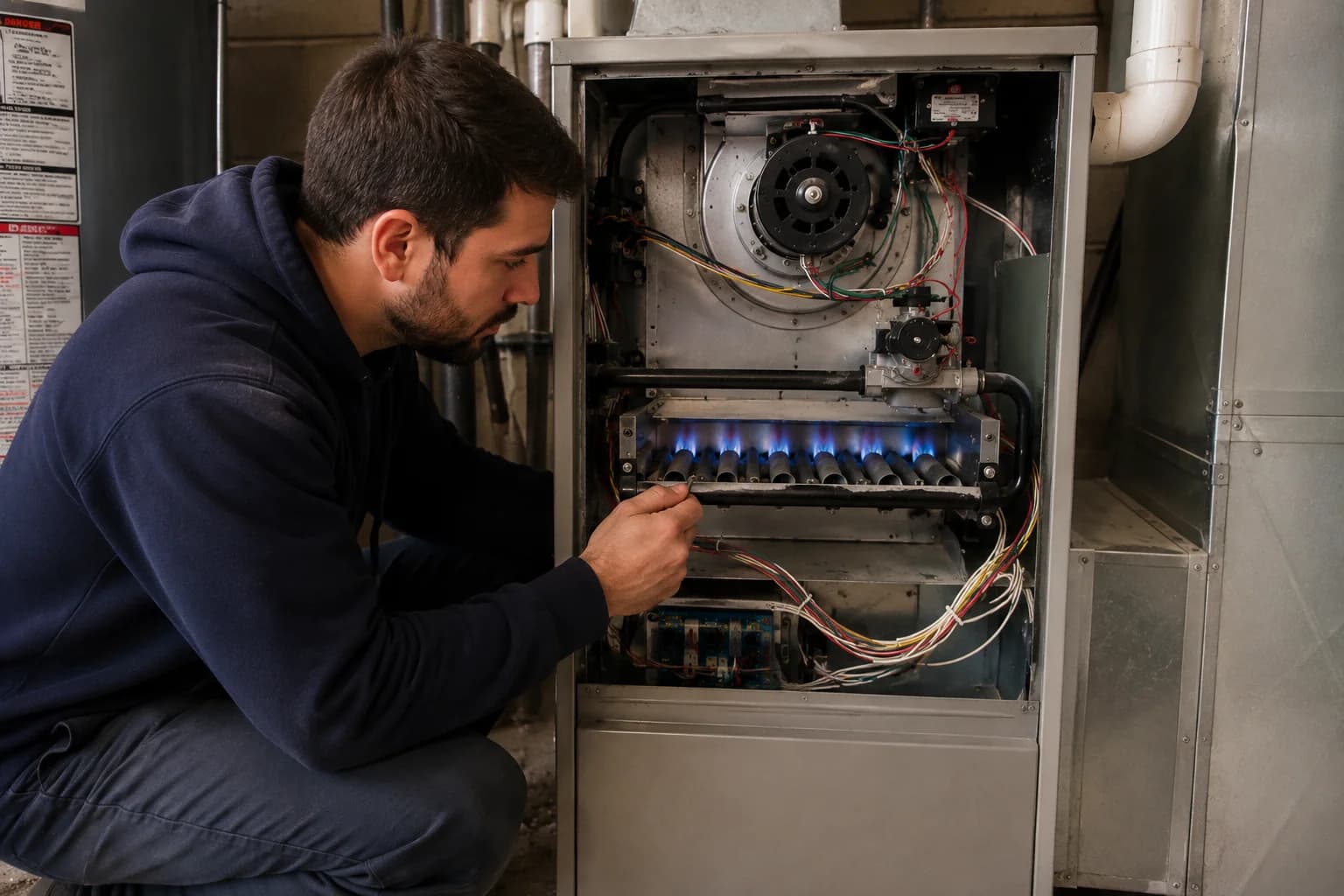

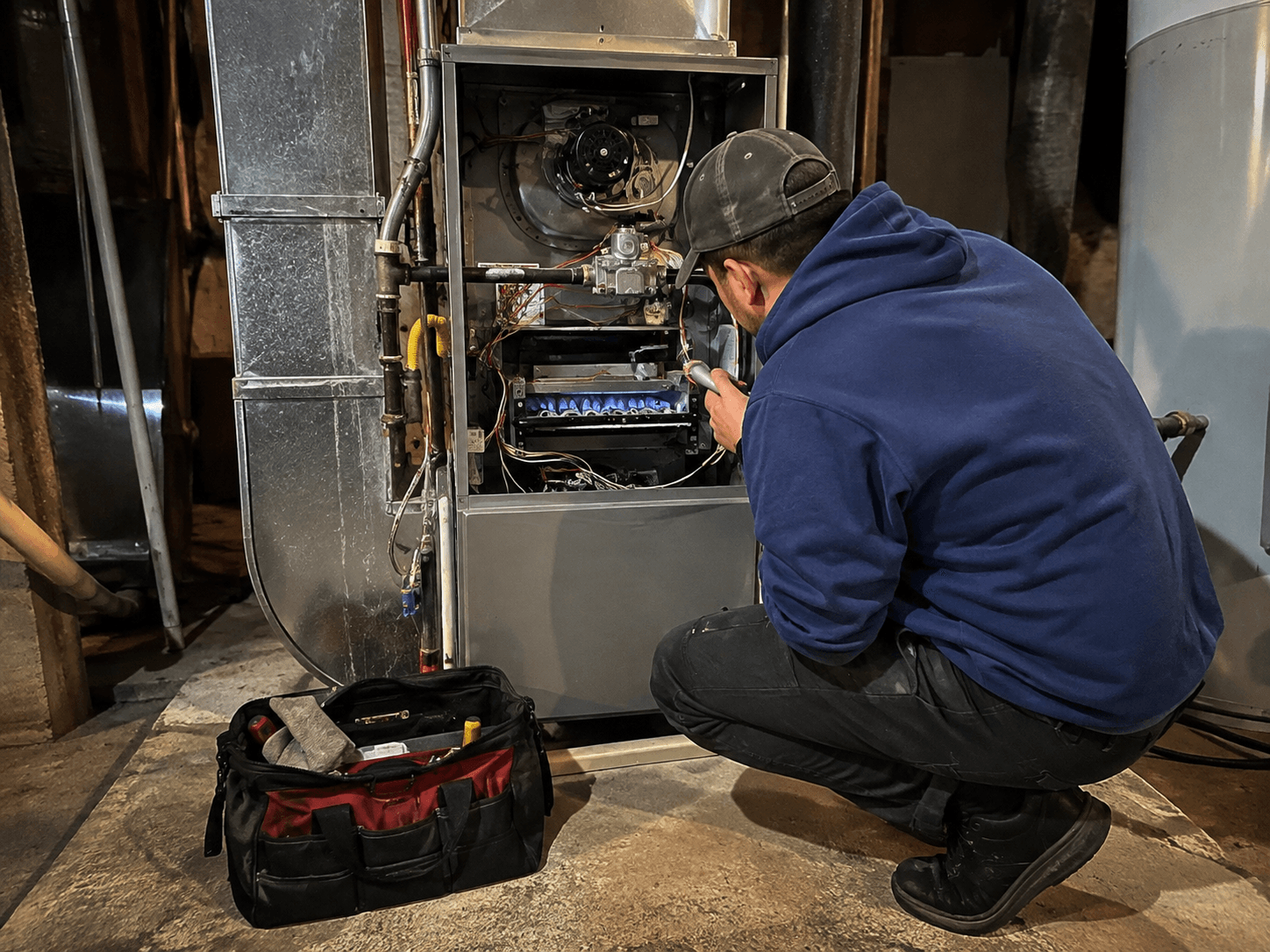
Most homeowners in Texas pay between $150 and $480 for standard furnace repairs.
Because heating systems in Texas spend long periods sitting idle before bearing the sudden load of winter cold snaps, understanding what influences these costs helps you make informed decisions when your heat cuts out.
What Determines the Cost of Furnace Repair in Texas?
A final repair bill rarely comes down to a single flat number. Heating technicians evaluate several practical factors when diagnosing and pricing a repair:
Diagnostic & Service Call Fees: Most licensed contractors charge a diagnostic fee between $75 and $150 to dispatch a technician, test the unit, and pinpoint the failure.
Many companies apply this fee toward the total cost if you approve the repair. Component Type & Availability: Basic wear-and-tear items (capacitors, flame sensors, ignitors) are universal and inexpensive.
Proprietary parts for high-efficiency or older systems—such as variable-speed inducer motors or OEM circuit boards—carry higher price tags. Fuel Source (Gas vs. Electric): Gas furnaces involve complex combustion mechanics, safety switches, and gas line connections, making parts slightly more expensive on average.
Electric air handlers have fewer mechanical components but rely heavily on sequencers and heating elements that require specialized electrical testing. Unit Accessibility: A furnace located in an open ground-floor utility closet requires far less labor time than a horizontal system squeezed into a tight, unfloored attic space.
Timing (Standard vs. Emergency): If a breakdown occurs during a severe winter freeze or over a holiday weekend, after-hours emergency diagnostic rates typically increase by 1.5x to 2x standard labor rates.
Warranty Coverage: If your furnace is under 10 years old and was properly registered, the manufacturer's parts warranty may cover the component, leaving you responsible only for labor and diagnostic costs.
Common Furnace Repairs and Estimated Costs
Furnaces rely on a specific sequence of operations to generate heat safely. When one component fails, the entire system shuts down to prevent damage or safety hazards.
| Component / Issue | Typical Cost Range (Parts + Labor) | What It Does |
| Flame Sensor Cleaning / Replacement | $80 – $220 | Detects the burner flame; shuts the system down if no flame is confirmed to prevent gas accumulation. |
| Hot Surface Ignitor | $120 – $275 | Generates the spark or electrical glow to light the gas burners. |
| Thermostat Replacement | $120 – $350 | Communicates temperature demands to the furnace control board. |
| Blower Motor Capacitor | $100 – $230 | Provides the electrical torque required to start and run the blower fan. |
| Pressure Switch / Limit Switch | $150 – $350 | Safety switches that confirm proper draft venting and protect against overheating. |
| Gas Valve Replacement | $250 – $650 | Regulates fuel flow into the burner assembly. |
| Integrated Control Board | $300 – $650 | The main circuit board governing timing, safety locks, and system staging. |
| Draft Inducer Fan Motor | $350 – $850 | Clears exhaust gases out through the flue before and during combustion. |
| Blower Fan Motor | $400 – $1,100 | Circulates heated air through your home's duct network. |
| Heat Exchanger | $1,200 – $2,500+ | Separates toxic combustion fumes from the breathable air flowing through your home. |
If your system is showing warning signs like intermittent heating, buzzing noises, or rapid shutoffs, scheduling a professional [Furnace Repair] before cold weather peaks will prevent minor electrical wear from cascading into major component failures.
Regional Price Variations Across Texas
While statewide baseline averages remain consistent, local labor markets, municipal permitting, and home designs create slight variations across major Texas metros:
Dallas & Fort Worth
In the DFW metroplex, gas furnaces installed in attic spaces are standard for single-family homes. Attic accessibility, along with competitive regional contractor labor rates, puts standard repair jobs in the $175 to $500 range. High demand during sudden North Texas freezes can temporarily push emergency wait times and rates higher.
Houston
In the greater Houston area, high ambient humidity can lead to off-season corrosion on electrical contacts, switches, and drain pans connected to hybrid cooling systems. Average repairs range between $160 and $490, with older coastal-adjacent systems occasionally requiring additional attention to electrical safety switches.
Austin, San Antonio, and Plano
In Central Texas and suburban hubs like Plano, heating systems vary widely between standard gas furnaces and all-electric heat pump air handlers. Repair costs across these markets typically hover between $150 and $475, with variations tied directly to parts availability and local technician hourly rates.
Repair vs. Replace: How to Decide
When facing a costly repair estimate, spending hundreds on an aging heating unit does not always make long-term financial sense. Use the $5,000 Rule or the 50% Guideline to guide your decision:
The Age vs. Cost Formula ($5,000 Rule): Multiply the age of your furnace (in years) by the total repair cost. If the result exceeds $5,000, replacing the unit is usually the more practical option. For example:
A 12-year-old furnace requiring an $600 blower motor repair ($12 \times 600 = 7,200$) is a strong candidate for replacement.
A 6-year-old furnace needing a $200 ignitor ($6 \times 200 = 1,200$) is an easy decision to repair.
The 50% Rule: If the required repair estimate equals 50% or more of the cost of a brand-new heating unit, invest the money toward a replacement instead of patching an expiring unit.
Heat Exchanger Integrity: If a technician discovers a cracked heat exchanger, the repair cost is often substantial ($1,500+), and the issue poses an active carbon monoxide risk.
On units older than 10 to 12 years, investing in a complete [Furnace Replacement] provides better efficiency, full warranty protection, and complete safety peace of mind.
When Is a Furnace Issue a Real Emergency?
Most heating glitches are inconvenient, but certain scenarios require immediate shutdown and same-day service:
The Smell of Rotten Eggs or Sulfur: Indicates a natural gas leak. Turn off the furnace, leave your home immediately, and contact your gas utility provider and an emergency HVAC technician from a safe distance.
Persistent Carbon Monoxide Alarms: A cracked heat exchanger or blocked flue can leak carbon monoxide into your living spaces.
Evacuate immediately and call emergency services. Electrical Burning Odors or Popping Sounds: Often caused by melted wire insulation, overloaded transformers, or seized blower bearings that pose an electrical fire risk.
Sub-Freezing Temperatures: When Texas temperatures drop below freezing, a complete loss of heat threatens household plumbing. Frozen pipes can burst, causing catastrophic water damage.
How to Prevent Unnecessary Furnace Repairs
You can avoid a significant percentage of winter service calls with basic preventive care:
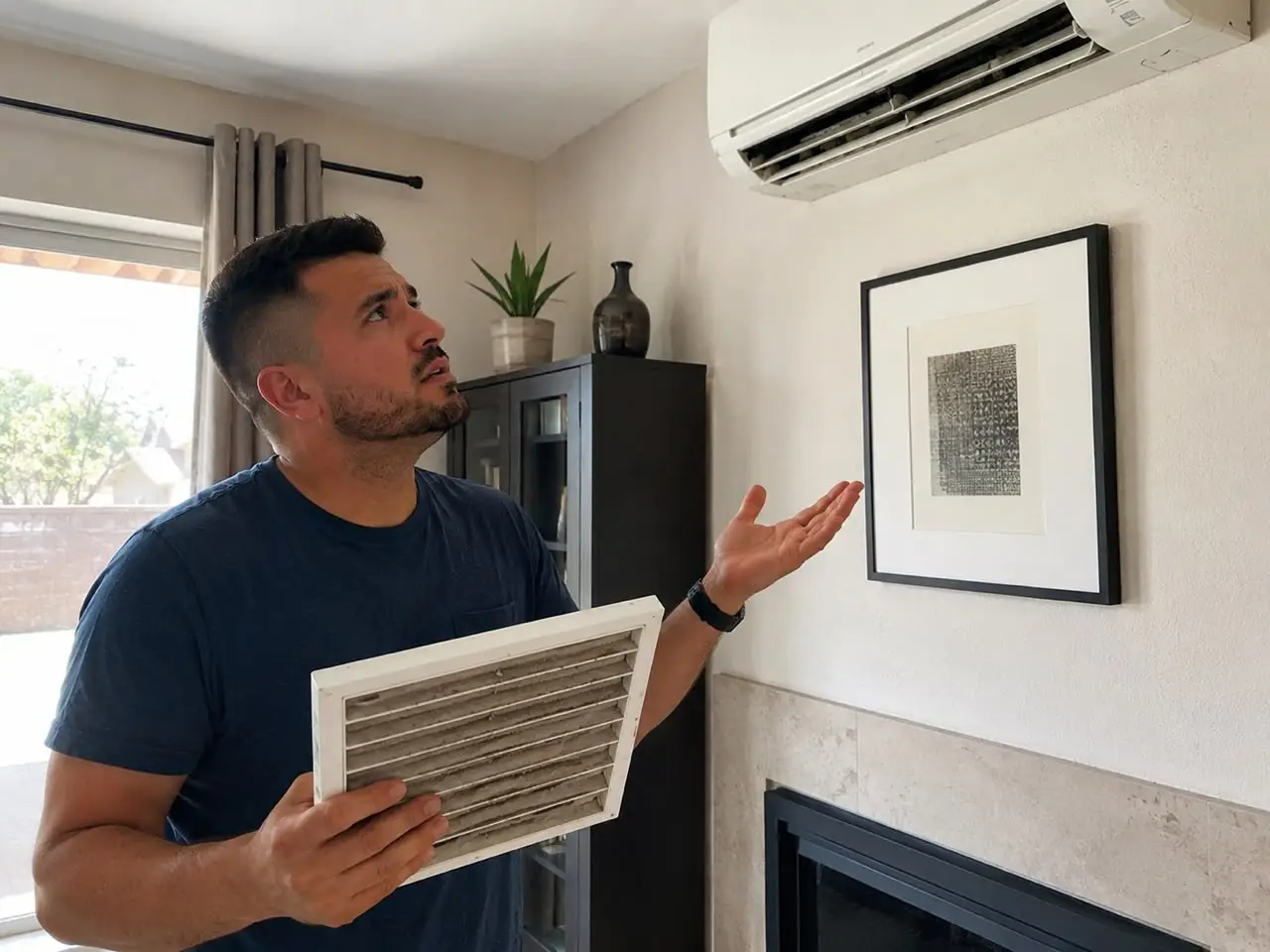
Replace Air Filters Every 60 to 90 Days: A clogged filter restricts airflow, causing the heat exchanger to overheat and triggering the high-limit safety switch to repeatedly shut the system down.
Keep Return and Supply Vents Open: Closing off too many room vents increases static pressure inside your ductwork, putting premature strain on the blower motor.
Schedule Annual Pre-Season Service: Because heating systems sit idle through long Texas summers, dust accumulation and stuck switches are common during the first startup of the year. Booking professional [Heating Maintenance] in early autumn ensures safety sensors are cleaned, electrical connections are torqued, and combustion chambers are inspected before you need reliable heat.
Frequently Asked Questions
Why does my furnace blow cold air?
Cold air typically stems from an incorrect thermostat setting (fan set to "ON" instead of "AUTO"), a dirty air filter causing an overheat lockout, a dirty flame sensor failing to confirm burner ignition, or an unlit pilot/ignitor failure.
How much should an HVAC diagnostic fee cost in Texas?
Standard diagnostic and trip fees range between $75 and $150 across most Texas markets.
How long do furnaces typically last in Texas?
Because Texas winters are relatively mild compared to northern climates, a well-maintained gas or electric furnace can last between 15 and 20 years. However, units installed in unconditioned, high-humidity attics may experience component wear closer to the 12-to-15-year mark.
Get Clear, Reliable Heating Service
A broken furnace during a Texas cold snap is stressful, but repairs do not have to involve guesswork. Whether you need a simple sensor adjustment, an emergency repair, or an honest assessment of an aging system, working with a licensed HVAC professional ensures your home stays warm, safe, and energy-efficient throughout the winter.